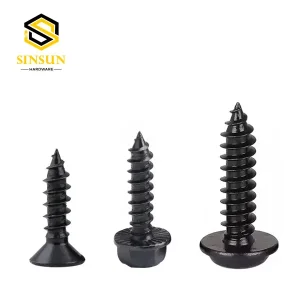
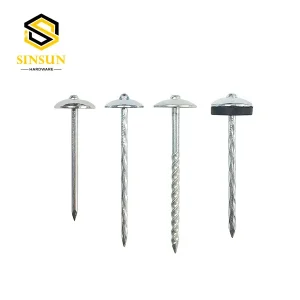
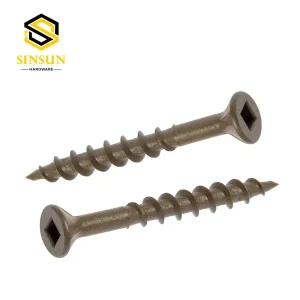
Split Spring Washers, commonly referenced as helical spring lock washers, play an essential role in mechanical engineering. By design, they are split at one point and bent into a helical shape. When compressed under load, the washer behaves like a spring, storing elastic energy and exerting continuous axial tension against the mating nut and bolt head. This load counteracts small thermal expansion movements, settling, or vibrational forces that cause conventional threaded joints to back off.
As a premier OEM manufacturer, Sinsun Hardware produces split spring washers with strict dimensional tolerances and material configurations. Under the standard DIN 127, ASME B18.21.1, and JIS B1251, our components undergo critical metallurgical transformations to ensure consistent deflection rates and prevent premature plastic deformation. For global procurement officers, finding a factory capable of producing components that retain their structural memory under dynamic loads is essential for safeguarding machine integrity and structural longevity.
Established in 2006, Sinsun Hardware has scaled from a regional production unit into Northern China’s largest manufacturing base. Utilizing raw material sourced directly from premier steel producers like Xingtai Steel, our operations are fully integrated from spheroidizing annealing to multi-station high-speed stamping.
Our engineering teams design and manufacture spring steel split washers to meet demanding international quality standards. Below are the key structural and chemical specifications of our primary production line.
| Standard / Metric | Common Materials | Hardness Range (HRC) | Surface Finishes Available | Key Applications |
|---|---|---|---|---|
| DIN 127 Type A / B | Carbon Steel (C70, C75, 65Mn) Stainless Steel (SUS 304, 316) |
HRC 44 - 51 HV 430 - 526 |
Plain Black, Zinc Plated (Cr3+), Hot Dip Galvanized, Zinc Flake | Automotive machinery, heavy electronics assembly, electrical enclosures. |
| ASME B18.21.1 | High Carbon Steel (SAE 1060-1090) Silicon Manganese Steel |
HRC 38 - 46 (Depending on Grade) |
Dacromet, Geomet Coatings, Yellow Zinc, Phosphating | North American structural steel framing, wind energy foundations, pump assemblies. |
| JIS B1251 | Alloy Steel (50CrV4 / 60Si2Mn) Phosphor Bronze |
HRC 40 - 50 | Mechanical Plating, Electro-galvanizing | Precision motors, railway systems, aerospace non-structural assemblies. |
Characterized by optimal yield strength and recovery elasticity. Suitable for non-corrosive environments or assemblies where protective coatings like yellow zinc or black phosphate are specified.
Chromium-vanadium alloy provides superior thermal tolerance, resisting relaxation at temperatures up to 250°C. Highly favored by automotive OEMs for engine and exhaust assemblies.
Austenitic compositions that provide high-level corrosion resistance against moisture and chemical exposure. Ideal for marine engineering, food processing equipment, and outdoor installations.
Procurement offices face complex logistics and material challenges in a changing global trade landscape. Secure supply chains demand consistency, quality assurance, and compliance.
When heavy machinery operates, structural joints are subjected to harmonic vibration and cyclic loading. Over time, these dynamic forces reduce the clamp load of threaded fasteners. Split spring washers serve as a cost-effective, passive mechanical lock. Our washers provide a reliable mechanical lock under fluctuating preloads, keeping assemblies secure in critical applications like mining equipment, vibrating screens, conveyor structures, and heavy duty diesel drive systems.
Sinsun Hardware mitigates these failure modes by enforcing tight limits on decarburization depth during heat treatment. Standard steel heat treating can occasionally result in surface soft-spots. Our modern control systems prevent carbon loss, maintaining consistent hardness across the entire cross-section of the washer.
International buyers require predictable lead times and reliable supply chain logistics. With a 12,000 m² smart warehouse and integrated warehouse management software, Sinsun coordinates shipping for both high-volume standard runs and customized OEM releases. Our location in Northern China provides access to deep-water shipping lanes, enabling prompt departures and efficient delivery across global trade routes.
We maintain safety stock program parameters for strategic industrial distributors, minimizing lead times down to 15-20 days for recurrent, high-tonnage contract releases. This logistics infrastructure allows us to ship thousands of tons of high-grade split washers annually.
At Sinsun Hardware, our production processes combine precision machinery, metallurgical control, and quality validation at each process step.
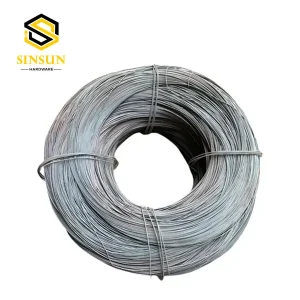
High-carbon steel wire rods from Xingtai Steel are processed in our four gas-fired spheroidizing furnaces. This step optimizes microstructure for cold formability, preventing structural anomalies during high-speed stamping.
Using German and Taiwanese multi-station machinery, raw wire is coiled and stamped to form the helical shape. Tight tooling clearance control maintains dimensional accuracy of inner and outer diameters within ±0.02mm.
Our facility operates four modern heat treatment lines. Washers are oil-quenched and tempered within tight parameters to achieve a consistent hardness profile of HRC 44-51, preventing embrittlement while maximizing spring rate.
Plated high-tensile fasteners undergo baking post-electroplating to drive out atomic hydrogen. This process prevents hydrogen-induced cracking when components are placed under high tension.
Each batch undergoes 12+ quality checks, including mechanical spring rate tests, salt spray testing (exceeding 1,000 hours for specialized coatings), dimensional verification, and thread-fit evaluation.
From a specialized domestic production facility to a leading global fastener manufacturer, Sinsun has expanded its operational footprint through targeted technical investment.
Founding & Market Penetration: Sinsun Hardware was founded in 2006 to produce precision self-tapping screws. In 2012, we established our direct Export Department to serve international buyers.
Integration & Modern Equipment: In 2015, we integrated spheroidizing furnaces and wire drawing operations. In 2018, we added German multi-station cold heading machinery to support complex configurations.
Production Scale & Automation: Achieved an annual output of 36,000 tons with over 1,100 export containers. By 2025, the installation of four continuous heat treatment lines will further increase capacity.
Global distribution requires compliance with regional environmental and quality standards. Sinsun Hardware maintains an integrated management system certified to ISO 9001:2015. We provide chemical analysis certs, metallurgical test records, and dimensional inspection reports for every production run.
For European and North American projects, we supply RoHS and REACH-compliant hardware. Our surface finishing options include trivalent chromium plating (Cr3+) and specialized organic finishes that avoid heavy metals while providing robust corrosion protection.
Our engineering department supports OEM requests, producing non-standard diameters, customized cross-sections, and specialized material grades. We work from 2D/3D CAD models or client-provided samples, using prototype testing to verify performance prior to production scaling.
Partner with our technical teams to optimize your fastener specifications, material choices, and delivery timelines.
Contact Engineering TeamCommon technical questions regarding the selection, application, and testing of split spring washers.