Explore our foundational range of heavy-duty industrial fasteners, engineered to international tolerances and built with premium steel grades.
In modern industrial assembly, the floating cage nut remains an indispensable captive hardware design element, securing rack-mount infrastructure worldwide.
The global demand for high-quality captive fastening components, specifically ODM floating cage nuts, has scaled rapidly alongside the exponential growth of cloud infrastructure, data centers, and advanced telecommunication hubs. Traditionally used to mount equipment in square-holed 19-inch racks, floating cage nuts combine the strength of a threaded block with the flexibility of a spring metal housing.
By allowing the threaded nut to "float" or adjust slightly within its cage (typically by 0.9mm to 1.8mm), this assembly compensates for minor alignment errors during installation in sheet-metal enclosures. This minimizes the risk of cross-threading and prevents damage to expensive hardware like enterprise servers, network switches, and uninterruptible power supplies (UPS).
In addition to data centers, floating cage nuts are critical elements in industrial automation control cabinets, medical laboratory equipment, military-grade rugged servers, and transportation dispatch infrastructure. As high-speed 5G network towers and localized edge computing expand across regions, weather-resistant, vibration-proof ODM floating cage nuts have transitioned from low-spec components to highly engineered hardware subjected to strict quality certifications.
| Industry Sector | Standard Thread Profile | Key Stress Resistance Parameter | Preferred Coating & Finish |
|---|---|---|---|
| Enterprise Datacenters | M6, M5, 10-32 UNF | Static Pull-Out Force > 1200 N | Yellow Zinc Chromate / Bright Nickel | Telecom Microstations | M6, 12-24 UNC | Vibration Resistance (IEC 60068) | Stainless Steel SS304/SS316 |
| EV Charging Cabinets | M8, M10 | Salt Spray Corrosion Resistance > 500h | Zinc-Nickel Alloy Flake |
| Automation Enclosures | M6, 10-32 UNF | Torque-to-Failure > 9.5 N·m | Black Oxide Coating |
A structural look at how Sinsun Hardware engineers cage nuts for durability, corrosion resistance, and load-bearing performance.
The external spring clip cage is stamped from high-grade Carbon Spring Steel (typically 65Mn or C67S), heat-treated to an ideal hardness profile of HRC 40-48. This ensures the cage retains its shape and elasticity over dozens of insertion and removal cycles, preventing structural failure.
The inner threaded nut block is cold-formed from Grade 8 medium carbon steel or stainless steel, allowing it to withstand high torque limits without stripping. For example, an M6 cage nut made by Sinsun consistently tolerates installation torques exceeding 12 N·m, surpassing standard DIN 934 criteria.
To resist corrosion in harsh environments, Sinsun applies advanced surface coatings. Our zinc-nickel alloy finishes endure over 1,000 hours of neutral salt spray testing (ISO 9227) without showing red rust, making them ideal for telecom enclosures in coastal areas.
As server density in hyper-scale datacenters increases, installation speed becomes a key metric for systems integrators. Sinsun's engineering division is presently mapping out a new generation of low-insertion-force (LIF) cage nuts. These designs reduce the mechanical force required to snap the cage into the rack flange by up to 35%, minimizing installer hand fatigue while maintaining high retention forces. Additionally, research is underway into electrically conductive plating formulas that improve chassis ground continuity directly through the cage contact points, removing the need for specialized grounding washers.
Northern China's largest self-tapping screw production base and global custom fastener partner.
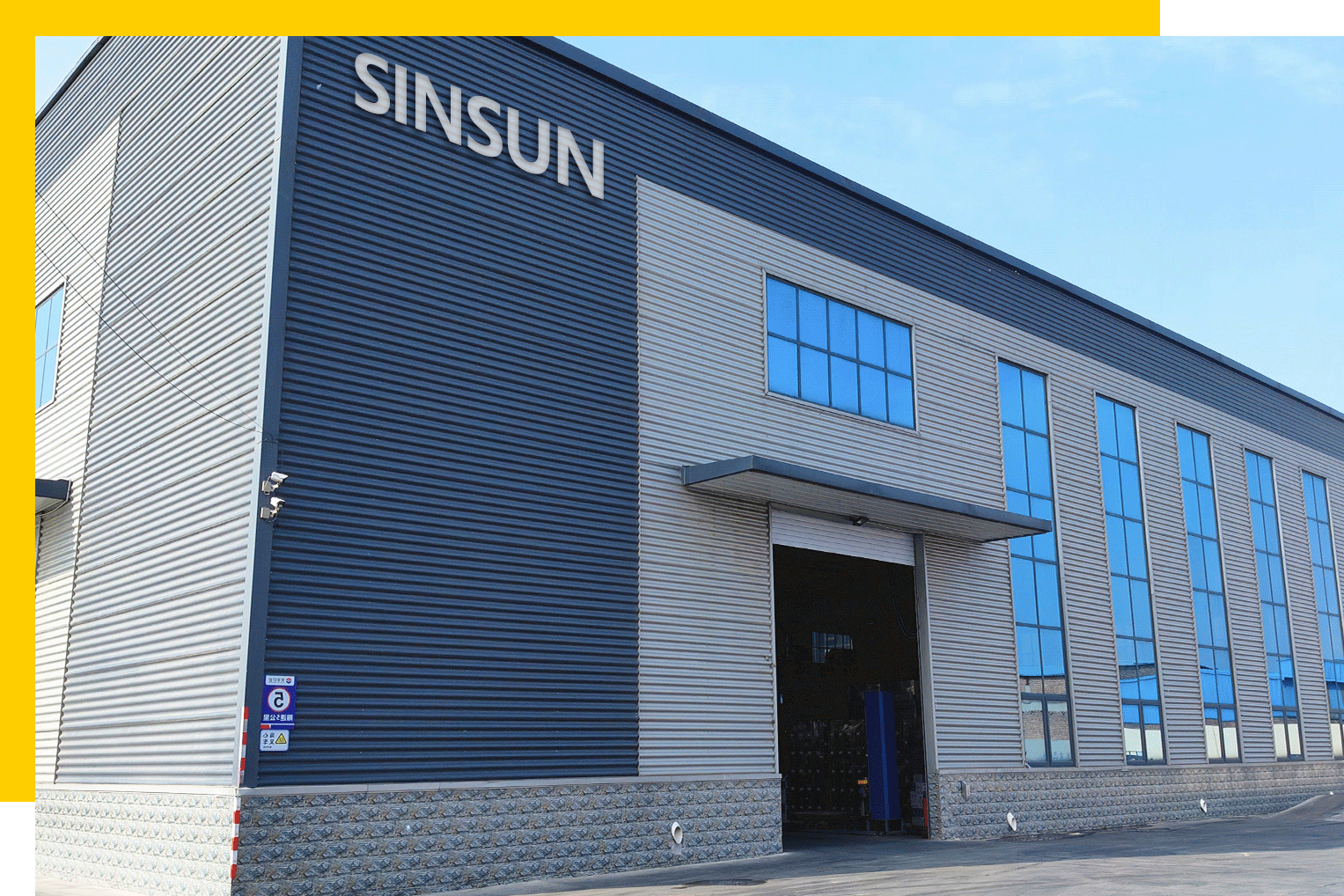
Sinsun Hardware, established in 2006, is a leading manufacturer and global supplier of high-quality fasteners. As Northern China's largest producer of Self-Tapping Screws, we operate from a gigantic 30,000 sqm integrated facility that includes modern production zones, a 12,000 sqm smart warehouse (18,000+ pallet capacity), and multi-language customer support centres. Our yearly supply of over 8,500 containers consistently services key global markets such as the Middle East, Southeast Asia, South America, and Russia.
Our production prowess is driven by German-imported machinery, precision Taiwanese technology, and a dependable staff of trained specialists. We offer over 20,000 SKUs of nails, screws, wires, and rivets, each undergoing 12+ stringent quality checks to assure outstanding polish (Ra ≤ 0.4μm), corrosion resistance (1,000+ hours salt spray), dimensional accuracy (±0.02mm), high strength (1,000+ MPa), and consistent hardness (HRC 28-32).
From a focused local manufacturer to an international fastener industry leader.
Sinsun Founded: Began with a singular focus on self-tapping screws, building core technical expertise and specialized manufacturing lines from the ground up.
Export Operations Launch: Established our dedicated export department, bringing high-precision fasteners to global markets and expanding international quality compliance protocols.
Vertical Integration: Added four advanced spheroidizing furnaces and in-house wire drawing lines, allowing for complete control of wire raw material quality from the outset.
Machinery Upgrades: Installed German multi-station cold heading machinery and integrated precision Taiwanese processes to expand product capabilities to drill tail screws.
Unprecedented Scale: Reached an annual output of 36,000 tons, shipping over 1,100 export containers to complex infrastructure projects globally.
Logistics Expansion: Expanded ready-stock capabilities with a 1,200 sqm buffer warehouse to ensure short lead times and efficient daily order distribution.
Advanced Heat Treatment: Integrated four advanced continuous atmosphere heat treatment lines, ensuring precise mechanical property control and faster lead times.
How we ensure strict quality compliance, dimensional accuracy, and mechanical strength at every step.
Our quality assurance starts with direct sourcing of premium alloy and carbon steel wire rod coils from Xingtai Steel, a leading metallurgical supplier. The wire rods undergo in-house spheroidize annealing to achieve uniform microstructure, maximizing ductility and preventing micro-cracking during cold heading.
Sinsun uses German-imported multi-station cold heading systems to manufacture fasteners at high speed with low tolerances. Precision tooling from Taiwan ensures consistent thread forming and dimensions (±0.02mm). Tail-gripping technology on self-drilling lines ensures clean, centered cutting points that drill and tap effectively.
Every production batch passes through our internal laboratory, which tests for:

Our quality management matches ISO standards, ensuring batch-to-batch consistency and full material traceability.
Our 12,000 sqm logistics warehouse offers custom packaging, barcoding, and automated pallet storage for streamlined logistics.
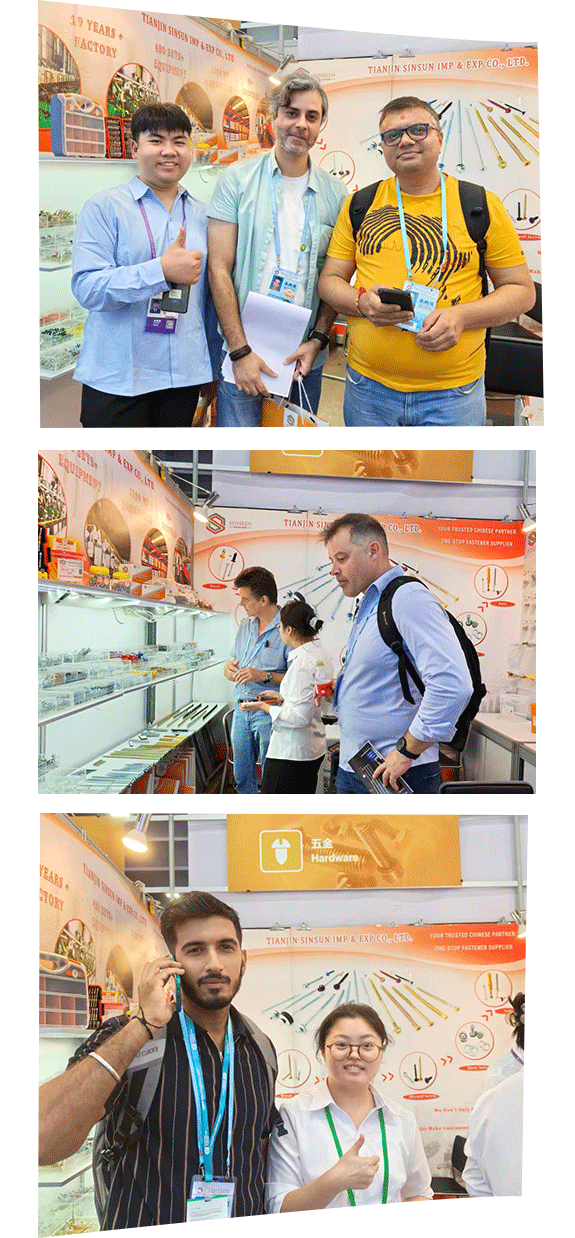
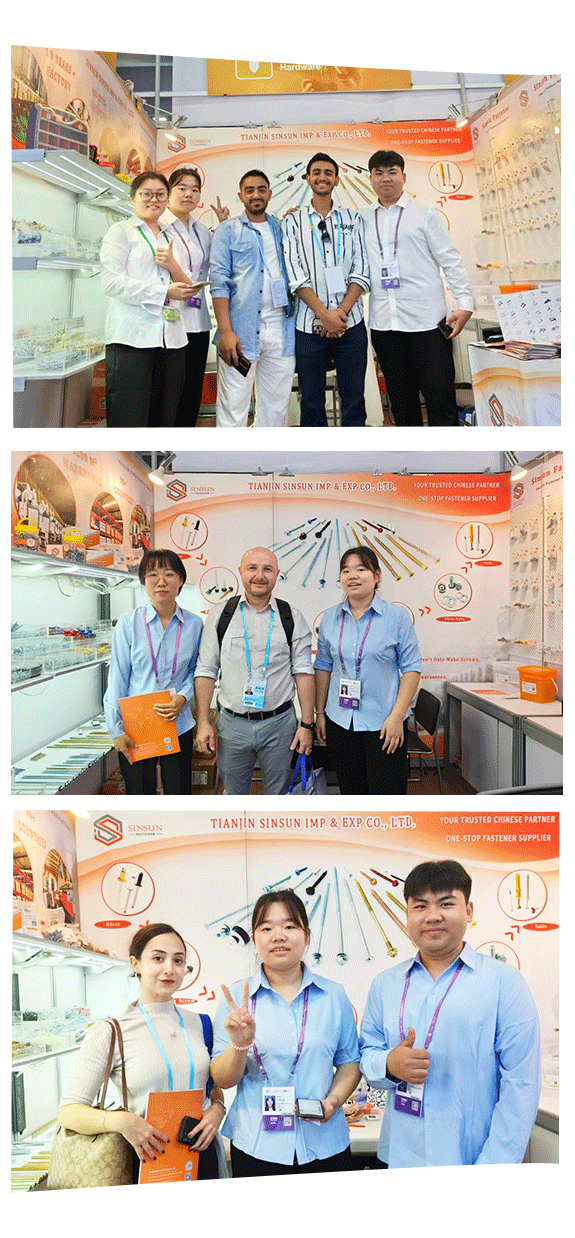
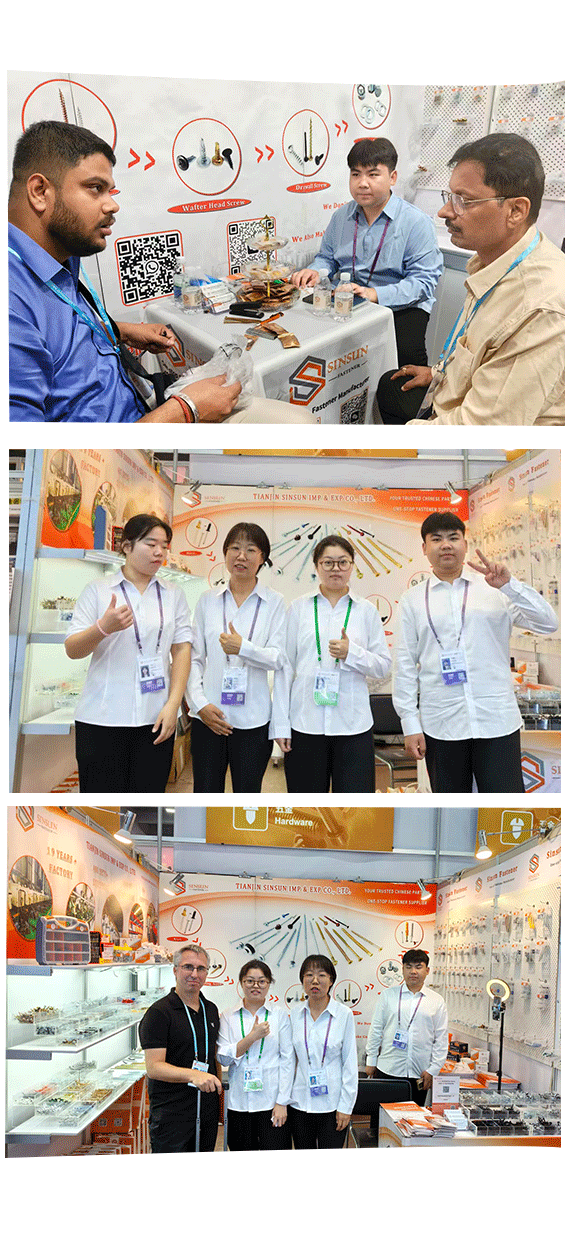
Key technical details answered by Sinsun's captive hardware engineering division.
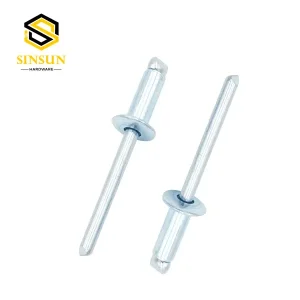
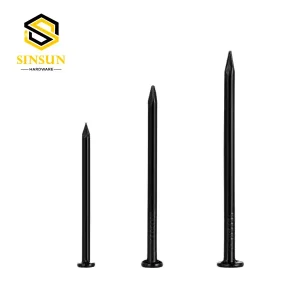
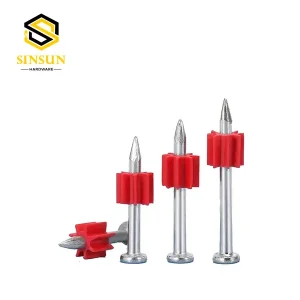
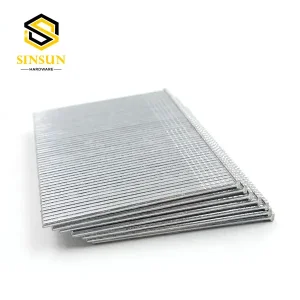
Complementary fixing and structural fastening solutions from our integrated production facility.
Sinsun Hardware offers customized designs, high torque tolerances, and long-term corrosion resistance for large-scale industrial projects.
Request a Fast Technical Quote