As organizations align with international ESG targets, the office supply and industrial fastening markets are experiencing a profound transformation. The demand for eco-friendly, plastic-free binding mechanisms and zero-waste fastening solutions has grown rapidly.
At Sinsun Hardware, we bridge the gap between heavy-duty engineering and sustainable design. While modern offices phase out traditional non-recyclable metal staples and hazardous plastic binders, we utilize our robust capabilities in precision manufacturing, metal annealing, and cold forming to engineering staple-free binder mechanisms, biodegradable binding structures, and high-tensile custom fasteners. This industrial synergy allows businesses to meet strict environmental compliance guidelines without sacrificing durability.
Traditional binding products complicate recycling processes. Modern paper shredding and pulping plants demand that all metal elements be separated beforehand, creating operational inefficiencies. By transitioning to custom-manufactured stapleless paper crimping systems and bio-based binder mechanisms, corporations streamline their workflows and eliminate plastic micro-contamination, driving true lifecycle circularity.
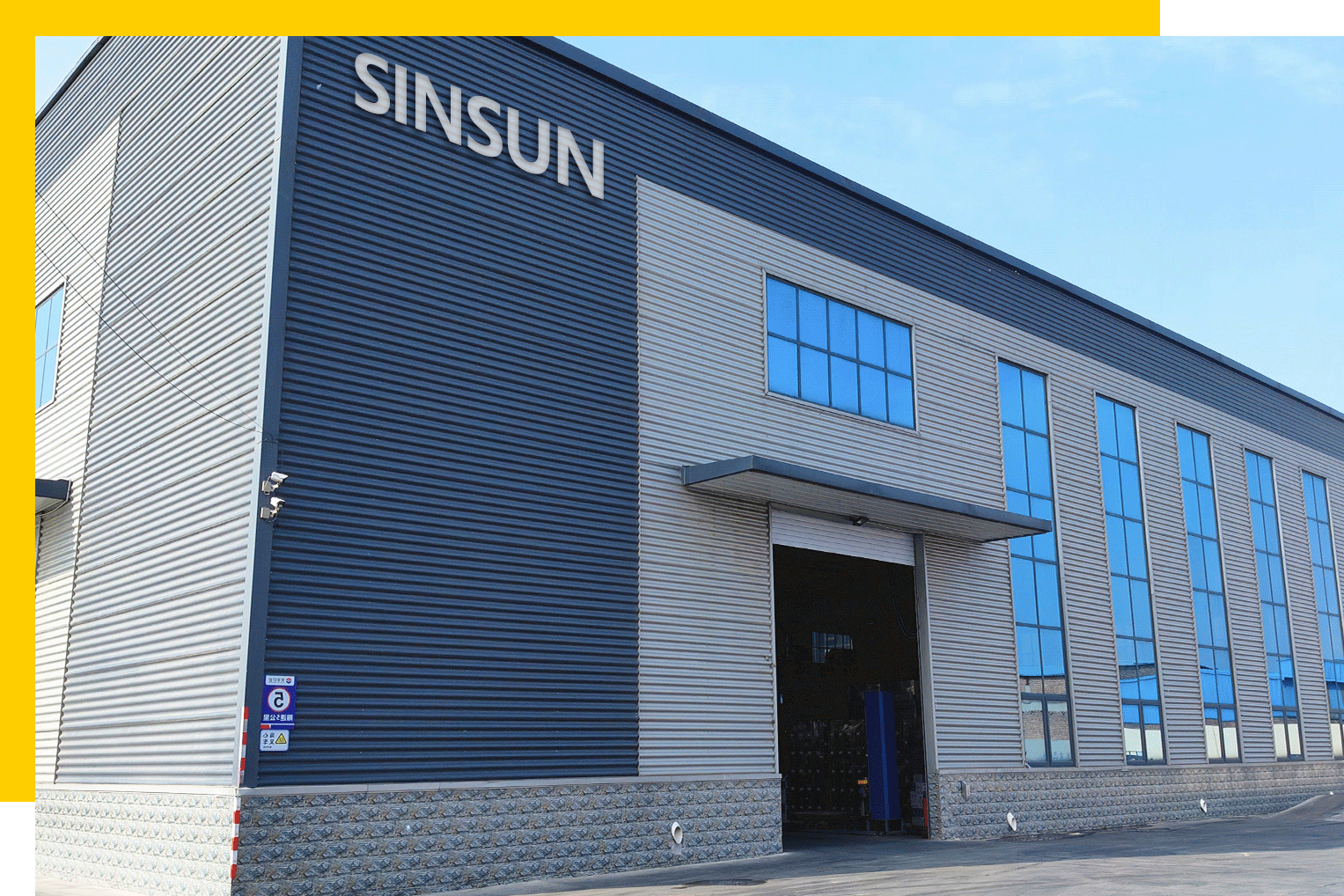
Founded in 2006, Sinsun Hardware operates a vertically integrated production ecosystem designed to service massive global trade demands.
Our facility uses multi-station cold heading and stamping machinery imported from Germany, combined with Taiwanese precision techniques, ensuring high dimensional consistency across every single run of our products.
We source raw steel directly from XING TAI Steel. Our production processes execute 12+ stringent verification steps including spheroidizing annealing, high-durability heat treatment, and custom anti-corrosion coating application.
Our smart warehouses hold over 18,000 pallets in ready stock. This capacity guarantees prompt distribution across the Middle East, Southeast Asia, South America, and Europe, even during times of international shipping pressure.
Modern commercial sectors face tightening environmental legislation. Under European directives such as the Green Claims Directive and Corporate Sustainability Reporting Directive (CSRD), companies must declare, verify, and lower their supply chain emissions. In this context, replacing metal staples and non-biodegradable binders with stapleless alternatives or natural paper binders represents a key improvement.
For large-scale administrative operations, including banking, legal services, health institutions, and government departments, paper files must remain secure yet instantly recyclable. Custom-designed OEM stapleless binding mechanisms punch, fold, and interlock paper sheets using their own fibers, avoiding the need for metal wires. For documents requiring traditional security, we offer plastic-free bio-binders and high-purity, easily separable galvanized paper-binding products.
Our Industrial Solutions:
By removing metal fasteners from the recycling loop, businesses reduce carbon footprint indicators, protect expensive shredding machines from damage, and ensure 100% recyclability of waste papers without laborious mechanical separation.
The market for sustainable office systems is expanding rapidly. Leading corporations in North America, Western Europe, and APAC are aggressively replacing traditional plastic binders and metal wire binding.
Europe leads the transition, driven by zero-plastic initiatives and strict waste hierarchy protocols. Sinsun's strict manufacturing standard compliance aligns directly with European RoHS, REACH, and wood-related environmental standards.
US and Canadian enterprises prioritize zero-waste office certifications (LEED, TRUE). OEM stapleless bindings offer an actionable strategy to achieve waste diversion benchmarks in massive corporate headquarters.
With Japan and South Korea enacting strict sorting laws, demand is rising for binding solutions that do not require sorting. Sinsun's production capacity provides reliable, high-volume supply to keep pace with this demand.
Our journey reflects constant industrial advancement, transitioning from a regional factory to an international manufacturing force.
Sinsun was founded with a clear directive: to construct a modern factory dedicated to self-tapping fasteners. This initial focus built our expertise in high-precision stamping and metallurgy.
We established our dedicated export unit, allowing us to market our specialized metal parts and high-volume fastening components directly to international buyers.
To control raw material quality at the source, Sinsun installed four advanced spheroidizing annealing furnaces. This integration secured our supply chain's chemical and structural consistency.
We expanded our capabilities with German multi-station cold heading machinery, enabling more precise manufacturing of complex fastening and binding products.
Production reached an annual milestone of 36,000 tons. Sinsun shipped over 1,100 containers globally, cementing our position as a high-capacity industrial supplier.
We deployed a new 12,000 m² smart warehouse featuring advanced logistical tracking to streamline fulfillment and support quick-turnaround shipments.
Sinsun integrated four modern computer-controlled heat treatment lines. This upgrade ensures consistent product tempering and provides a strong foundation for future eco-binding material developments.
Whether producing heavy-duty concrete nails, custom fasteners, or precision mechanical binding assemblies, Sinsun works to strict tolerances. Our products are engineered to withstand stress and deliver long-lasting performance.
Our quality assurance workflow guarantees that products consistently meet performance targets before leaving our facility:
All Sinsun products undergo 12+ rigorous quality checks. We welcome on-site audits and inspections from international clients to demonstrate our production standards and material transparency.
Integrating computerized vision systems to automatically inspect crimping tolerances and detect minor anomalies in high-speed binder production lines.
Developing bio-sourced dry coatings that provide rust resistance without utilizing synthetic chemicals, supporting environmental goals.
Transitioning our high-capacity annealing and tempering systems to rely on clean energy, working toward a low-carbon manufacturing process.