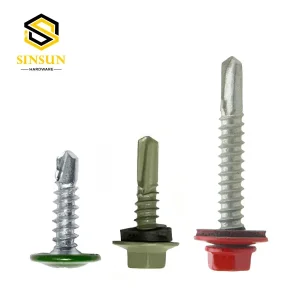
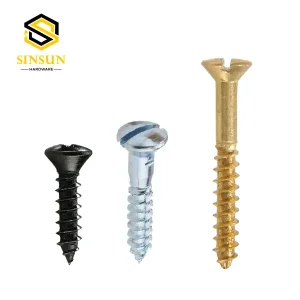
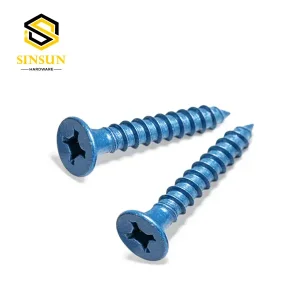
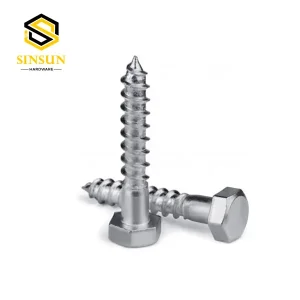
Explore our premium range of industrial-grade screws, fasteners, and locking elements manufactured to global specifications.
Engineering precision meets structural safety in high-stress industrial applications.
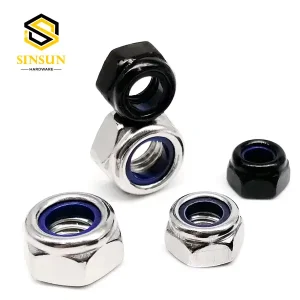
In structural engineering, the vulnerability of threaded joints to thermal fluctuations and shear vibrations represents a critical failure point. Standard fasteners, when subjected to dynamic loading, suffer from micro-rotations that lead to preload loss. The Self-Locking Acorn Nut represents an advanced engineering response. Combining the protective physical enclosure of a classic dome (or cap) nut with a torque-resistant friction element, it prevents thread wear and holds fast under vibration.
Unlike standard hexagonal locking elements, a self-locking acorn nut protects the exposed male thread termination. In systems running aggressive chemicals, marine salinity, or washdown protocols, exposed threads collect moisture and debris, accelerating galvanic and pitting corrosion. The dome structure stops this process, keeping the internal threads clean and easy to service. The self-locking feature (like a built-in nylon insert or deformed thread structure) provides a continuous radial pressure called prevailing torque. This keeps the assembly tight even if the joint loses its initial tension.
How metallurgy, dimensions, and tolerances align to meet aerospace, automotive, and heavy machinery standards.
We utilize Class 8 and Class 10 carbon steels for general structural applications. For applications needing high tensile strength, our alloy steel line achieves tensile ratings over 1,000 MPa, with hardness ranges of HRC 28-32. This prevents thread stripping under high torque.
For corrosive settings, we work with SS304 (A2-70) and marine-grade SS316 (A4-80). These grades are passivated to increase rust resistance, making them ideal for marine hardware, offshore energy systems, and chemical processing equipment.
Buyers can select between standard non-metallic (Nylon 66) rings for temperature ranges up to 120°C, or all-metal prevailing torque designs (such as distorted thread styles) for high-temperature settings like automotive exhaust manifolds.
| Dimensional Standard | Thread Range | Locking Insert Material | Surface Coatings | Primary Applications |
|---|---|---|---|---|
| DIN 986 / ISO 10511 | M3 to M20 | Polyamide / Nylon 66 | Clear Zinc, Yellow Zinc, Nickel | Automotive interiors, Electronics |
| ASME B18.16.6 | #4 to 1" (UNC / UNF) | Nylon 66 / Glass-filled | Hot-Dip Galvanized, Geomet | Heavy infrastructure, Solar Mounts |
| Custom Specifications | Engineered Drawings | All-Metal Deformed Thread | 1000+ Hrs Salt Spray Coating | Petrochemical plants, Exhaust units |
Tailored performance for demanding environments around the world.
With the rise of Electric Vehicles (EVs), chassis panels, suspension systems, and battery packs must handle constant vibrations. Our fasteners maintain their tension despite road vibrations, preventing electrical grounding issues and mechanical failures.
Outdoor tracking arrays are subject to wind load cycles. The protective cap prevents rain and moisture from rusting the threads, keeping assemblies solid over their 25-year service life.
Salty maritime air corrodes standard fasteners quickly. Using our passivated stainless steel SS316 self-locking acorn nuts protects exposed threads from saltwater, saving maintenance time and costs.
From highway sign structures to architectural handrails, these fasteners prevent dynamic shear loads from backing off structural nuts, while providing a clean, professional finish.
In chemical refineries and food processing facilities, washdowns use acids and high-pressure water. Our dome cap design shields the internal thread profiles from chemical exposure and corrosion.
For aviation ground support systems and cabin interiors, weight efficiency, high tensile strength, and vibration safety are essential. Our aerospace-grade locking nuts deliver this reliability.
How Sinsun Hardware integrates premium steel sourcing, high-volume production, and advanced testing under one roof.
We source our steel coils directly from top mills like Xingtai Iron and Steel. Each batch comes with chemical composition reports detailing carbon, manganese, phosphorus, and sulfur content. This guarantees consistent strength across all production batches.
Our facility runs multi-station cold heading machines imported from Germany alongside precision tooling from Taiwan. Cold forming changes the steel's grain structure to improve strength. This process maintains tight tolerances down to ±0.02mm.
We operate four heat treatment lines to control heating and quenching cycles. This lets us achieve uniform tempered martensite structures, giving the fasteners their strength and impact resistance without causing hydrogen embrittlement.
Building a global fastener manufacturing brand through dedication, investment, and technology.
We started with a focused goal: to build a modern factory specializing in high-performance self-tapping screws and core fasteners, establishing our technical foundations.
Expanding beyond domestic markets, we opened our dedicated Export Department. Our products soon reached users in the Middle East, Southeast Asia, South America, and Russia.
We added four spheroidizing furnaces and built our wire drawing workshop. This allowed us to control quality starting from the raw steel wire.
We invested in multi-station cold heading machines from Germany and expanded our line to include custom drilling and self-locking fasteners.
We reached a production milestone of 36,000 tons annually, shipping over 1,100 containers globally and showing our ability to handle large-scale supply needs.
We built a 12,000 m² warehouse with an 18,000+ pallet capacity, keeping a ready stock of common items to ensure fast shipping times.
The addition of four automated heat treatment lines gives us full control over hardening and tempering cycles, ensuring high reliability for every batch.
Meeting international quality standards through strict testing protocols.
Our coatings, including zinc, nickel, and Geomet, survive over 1,000 hours of continuous salt spray testing to prevent red rust.
Our processes achieve a surface roughness finish of Ra ≤ 0.4μm, helping to prevent friction variations during installation.
We inspect internal threads with calibrated thread go/no-go gauges to match 6H metric or 2B unified standards.
Each batch is tested for prevailing torque to ensure the self-locking inserts meet dynamic safety limits.
Every shipment undergoes 12+ quality checks, covering chemical analysis of the steel to final dimensions, torque limits, and zinc plating thickness. This ensures our fasteners hold up under the most demanding conditions.
Technical advice from our engineering team on choosing, installing, and using locking fasteners.
A comprehensive inventory of structural screws, anchor systems, and industrial hardware for global distribution.