Choosing a Steel Nail manufacturer requires more than comparing prices on a supplier website. Nail quality affects construction speed, holding strength, worker safety, and long-term project performance. A dependable producer should offer consistent wire quality, accurate dimensions, clean surfaces, and reliable packaging. Small details matter.
This guide examines ten leading Steel Nail manufacturers through practical purchasing criteria. These include production capacity, material control, product range, quality testing, export experience, and customer support. Factory certifications can provide useful evidence, but they should not replace direct verification. Buyers should request samples, inspect packaging, and compare test reports before placing large orders. A polished catalog is not proof of stable production.
The comparison also considers common nail types, including common nails, concrete nails, roofing nails, and coil nails. Each application demands different hardness, coating performance, and dimensional accuracy. Experienced procurement teams often check nail heads, shanks, points, and surface finishes under simple inspection tools. That step can reveal problems hidden in photographs.
However, rankings are never completely universal. A manufacturer suited to a regional hardware distributor may not fit a large infrastructure contractor. Delivery distance, minimum order quantities, customization, and payment terms can change the final decision. Market information also changes over time, so readers should confirm current certifications and capacity. This article provides a practical starting point, not a substitute for supplier audits or independent testing. Even strong manufacturers may show inconsistent batches occasionally. Careful verification remains essential.
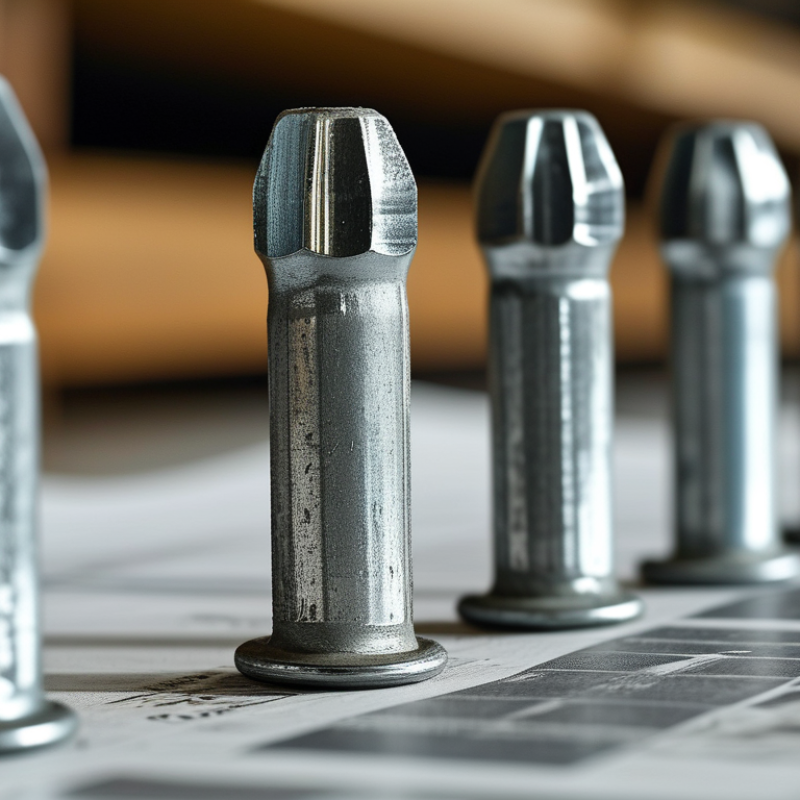
A credible top-ten list of steel nail manufacturers should begin with capacity, not advertising claims. Examine annual output, production lines, and the ability to maintain stable delivery during peak orders. A plant producing several wire diameters can support more applications, from pallet assembly to framing and concrete work. Capacity must also include quality consistency. A large factory with uneven hardness is not a dependable supplier. Request production records, batch traceability, and recent inspection results. Published figures can become outdated, so verify them with current documents and factory communication.
Standards reveal technical discipline. Look for evidence of dimensional control, tensile testing, coating checks, and corrosion evaluation. Recognized quality systems add confidence, but certificates alone are not enough. Independent audits and sample testing provide stronger evidence. Product scope matters too. A capable manufacturer may offer smooth, galvanized, bright, and high-tensile nails, with options for coils, strips, or bulk cartons. Yet wider scope can reduce specialization. That trade-off deserves attention.
Tips: Compare three recent batches, not one attractive sample. Check nail length, shank diameter, head shape, and coating weight. Ask how rejected products are isolated. Visit the plant when possible. Watch the drawing machines, packing area, and storage conditions. Small details matter. I would also question unusually low prices, although price alone cannot prove poor quality. Some suppliers explain costs clearly; others leave gaps that buyers should not ignore. Reliable rankings combine measurable capacity, verified standards, and a product range suited to the actual application.
| Rank | Anonymous Manufacturer Profile | Indicative Annual Capacity | Primary Steel Types | Applicable Standards | Product Scope | Typical Nail Diameter | Typical Applications |
|---|---|---|---|---|---|---|---|
| 1 | Profile A — Global high-volume producer | Over 100,000 metric tons | Low-carbon steel; galvanized steel | ASTM F1667; ASTM A853; ISO 16120 wire inputs | Common nails, concrete nails, roofing nails, collated nails, cut-to-length wire nails | 1.6–5.5 mm | Construction, pallets, packaging, general industrial use |
| 2 | Profile B — Integrated wire-to-nail producer | 50,000–100,000 metric tons | Low-carbon steel; high-tensile steel | ASTM F1667; EN 10218-2; ISO 16120 | Smooth-shank nails, ring-shank nails, screw-shank nails, clipped-head nails | 2.0–6.0 mm | Structural timber, pallets, crates, framing |
| 3 | Profile C — Galvanized and corrosion-resistant specialist | 30,000–75,000 metric tons | Electro-galvanized; hot-dip galvanized steel | ASTM F1667; ASTM A153 coating practice where applicable; EN ISO 2081 | Galvanized common nails, roofing nails, masonry nails, exterior framing nails | 2.0–5.0 mm | Outdoor construction, roofing, fencing, treated timber |
| 4 | Profile D — Industrial collated-nail producer | 25,000–60,000 metric tons | Carbon steel; stainless steel options | ASTM F1667; ISO 9001 quality systems; tool-specific collation requirements | Paper-collated framing nails, plastic-collated nails, coil nails, strip nails | 2.5–3.8 mm | Pneumatic nailers, framing, pallets, furniture and assembly lines |
| 5 | Profile E — Heavy-duty construction nail producer | 20,000–50,000 metric tons | High-carbon steel; hardened steel | ASTM F1667; ASTM A510/A510M wire requirements where specified | Concrete nails, masonry nails, hardened nails, cut masonry fasteners | 2.5–6.5 mm | Concrete, block, brick, hardwood and heavy-duty fixing |
| 6 | Profile F — European standard-nail producer | 15,000–40,000 metric tons | Uncoated low-carbon steel; galvanized steel | DIN 1151; EN 10218-2; ISO 4012 packaging and quality practices where specified | Round wire nails, lost-head nails, oval-head nails, finishing nails | 1.8–5.0 mm | Joinery, carpentry, furniture, interior finishing |
| 7 | Profile G — Stainless-steel nail specialist | 5,000–20,000 metric tons | AISI 304; AISI 316 stainless steel | ASTM F1667; ASTM A276 stainless-steel material specification | Stainless finishing nails, siding nails, boat nails, decking nails | 1.5–4.5 mm | Marine environments, coastal construction, decking, exterior trim |
| 8 | Profile H — Pallet and packaging nail producer | 10,000–35,000 metric tons | Low-carbon steel; high-tensile steel | ASTM F1667; ISPM 15-compatible packaging practices where required | Pallet nails, coil nails, screw-shank nails, hardened pallet nails | 2.1–4.2 mm | Wooden pallets, export crates, drums, industrial packaging |
| 9 | Profile I — Roofing and cladding nail producer | 8,000–25,000 metric tons | Galvanized steel; aluminum-head steel nails | ASTM F1667; ASTM A153 or EN ISO 1461 coating requirements where applicable | Umbrella-head roofing nails, ring-shank roofing nails, cladding nails | 2.5–4.0 mm | Roofing felt, asphalt shingles, sheet cladding, weatherproof construction |
| 10 | Profile J — Precision and private-label producer | 3,000–15,000 metric tons | Carbon steel; stainless steel; brass-plated steel | ASTM F1667; DIN 1151; ISO 9001 quality systems | Finishing nails, panel pins, upholstery nails, decorative and customized nails | 0.8–3.5 mm | Furniture, cabinetry, decorative work, light assembly and hardware distribution |
Note: Company names and brand identifiers are intentionally omitted. Capacity figures are indicative industry-scale ranges; exact output depends on plant configuration, product mix, operating schedule, and certification scope.
Reliable manufacturers control wire purchasing, drawing, sharpening, heat treatment, inspection, and packaging. They provide traceable batch records and recent test reports. Large capacity alone proves little.
Global crude steel output reached 1.892 billion tonnes in 2023. This shows the industry’s enormous scale. However, steel volume cannot prove nail quality or manufacturing consistency.
Compare concrete nails, roofing nails, and galvanized nails. Check whether each type maintains stable dimensions across production batches. Sample results matter more than attractive production claims.
Request the wire grade, heat number, mill test report, and lot records. Ask whether the wire is low-carbon, medium-carbon, or higher-carbon. Stronger wire is not always better.
Look for bare spots, peeling, rough zinc buildup, and uneven color. Request coating thickness or coating mass data. A recent laboratory report is more useful than general marketing language.
Measure shank diameter, nail length, head diameter, and point geometry. Use a calibrated micrometer. Visual inspection can miss small but costly deviations.
Drive samples into the actual wood species used in construction. Check bending, feeding, alignment, pullout, and corrosion exposure. Results may vary between batches.
Test cartons during humid storage and the planned transport route. Packaging should protect nails from moisture and crushing. One weak carton can create installation waste.
One excellent sample may not represent regular output. Measure samples from different batches and record defect rates. Perfect consistency is difficult, so unclear evidence deserves caution.
They should explain tolerances, coating methods, sampling frequency, and known limitations. Coiled wire memory may affect feeding and nail alignment. Honest uncertainty can be more dependable than perfect promises.
This article explains how to identify the top Steel Nail manufacturers by examining production capacity, product scope, quality standards, export strength, and the reliability of available data. With global crude steel output reaching 1.892 billion tonnes in 2023, the industry benefits from a broad raw-material base, but manufacturers differ significantly in specialization, consistency, and international coverage. The comparison focuses on measurable factors rather than name recognition, including annual capacity, export performance, manufacturing technology, and compliance with ASTM F1667 requirements for driven fasteners.
It also evaluates the wire grades, surface coatings, shapes, and dimensional ranges used in Steel Nail production under relevant ASTM A510 requirements. Manufacturers are ranked according to certification coverage, regional reach, production transparency, quality-control systems, and evidence that their products meet stated specifications. This approach helps buyers distinguish between large-scale producers and suppliers with stronger technical verification, while supporting informed decisions for construction, packaging, furniture, and general industrial applications.