How to Choose Fine Thread Drywall Screws in 2026?

Time:2026-09-22 Author:Aria
0%

Selecting the right Fine Thread Drywall Screw in 2026 requires more than checking its price or finish. Screw geometry affects holding strength, installation speed, board damage, and future repairs. Fine threads are designed for metal studs, where their sharper engagement can improve control without relying on coarse wood-style threads.

Standards matter here. ASTM C954 covers self-drilling screws used with gypsum panels and steel studs, while ASTM C1002 addresses screws for gypsum products applied to wood or steel framing. The Gypsum Association’s GA-216 publication also emphasizes correct fastener spacing, penetration, and panel installation practices. These references provide a stronger foundation than informal product claims. They also reveal an important detail: no single screw performs equally well in every substrate.

Market outlooks from Freedonia and Dodge Construction Network continue to identify renovation, commercial interiors, and light construction as major drywall-demand areas. That growth increases the need for consistent fastening decisions. In practical work, installers usually examine stud gauge, panel thickness, screw length, corrosion exposure, and driver-bit compatibility before opening a carton. Small details matter.

A common mistake is choosing fine-thread screws for thin metal without testing pull-through resistance. Another is assuming black phosphate coating suits every room. It may not. Humidity changes the decision.

This guide compares thread design, point style, coating, head shape, and compliance considerations for 2026 projects. It also questions simplified buying advice, because jobsite conditions rarely behave perfectly. Experienced installers still make errors. Good selection reduces them.
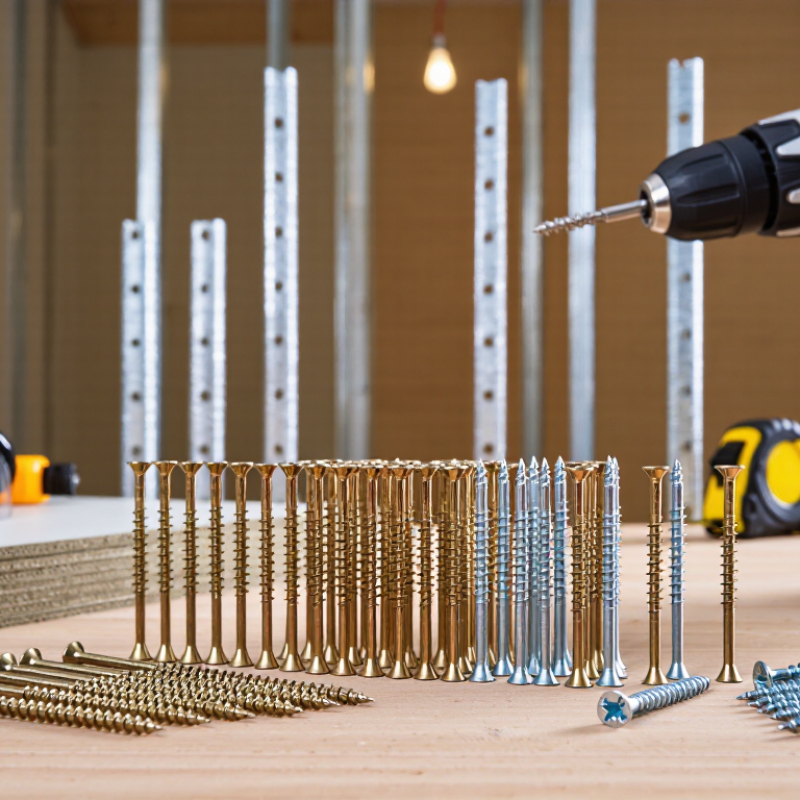
How to Choose Fine Thread Drywall Screws in 2026?

Define Fine-Thread Screws by ASTM C1002 Type S Steel-Framing Standards

How to Choose Fine Thread Drywall Screws in 2026?

Fine-thread drywall screws should be defined by performance, not appearance. Under ASTM C1002, Type S screws are designed for fastening gypsum panels to steel framing. Type S commonly uses a sharp point for lighter-gauge steel. Type S-12 uses a drill point for thicker steel members. The distinction matters when the screw must pierce metal cleanly without excessive driving force. The label is not enough. Check the package for the ASTM C1002 classification, nominal diameter, length, point style, and coating information.

Construction volume makes consistent selection more important. The U.S. Census Bureau reported approximately 2.15 trillion dollars in U.S. construction spending during 2024. That scale increases the cost of small installation errors. A screw that spins freely may leave a loose panel. Excessive penetration can damage the face paper or distort the steel flange. In field work, I have seen crews choose screws by color alone. That shortcut fails.

A practical choice starts with the framing thickness and the panel stack-up. Use enough length to achieve reliable thread engagement, but avoid unnecessary penetration behind the stud. ASTM C1002 compliance should be verified through technical documentation and lot traceability. Bending tests, pull-over performance, and point integrity deserve attention. I would also check the driver setting on sample panels before production. Real conditions vary. Dust, uneven framing, and rushed fastening can expose weaknesses that a specification sheet does not show. (ASTM C1002; U.S. Census Bureau, Value of Construction Put in Place, 2024)

Match Screw Length to 1/2-Inch or 5/8-Inch Gypsum Board Thickness

How to Choose Fine Thread Drywall Screws in 2026?

Fine thread drywall screws work best when gypsum board is attached to metal studs. Their sharp threads grip thin steel without excessive splitting or resistance. Screw length must match the board thickness and the stud connection.

For 1/2-inch gypsum board, a 1-inch fine thread screw is usually suitable. It leaves enough length to pass through the panel and secure the metal stud. For 5/8-inch board, choose a 1-1/4-inch screw in most standard installations. The extra length compensates for the thicker panel. Avoid choosing screws by appearance alone. A longer screw is not automatically stronger. It may contact hidden wiring or plumbing in some wall systems.

Check the assembly before fastening. The screw should sit slightly below the paper surface without tearing it. A damaged paper face can weaken the finished joint. I normally test one screw on a scrap piece first, especially when the metal stud feels unusually thin. That small check prevents many loose fasteners. Keep spacing consistent, and drive screws straight into the stud. Angled screws can reduce holding strength.

One detail deserves attention. Some installers use 1-1/4-inch screws for every panel thickness, but that habit is not always appropriate. Thicker screws or unsuitable points can distort light-gauge framing. A calibrated clutch helps control depth. Recheck the board after fastening, because a slightly proud screw is easier to correct than a torn panel.

Select Fine Threads for 20–25 Gauge Steel Studs and Metal Framing

How to Choose Fine Thread Drywall Screws in 2026?

Select Fine Threads for 20–25 Gauge Steel Studs and Metal Framing

Fine thread drywall screws are usually the practical choice for 20–25 gauge steel studs. Their closely spaced threads grip thin metal without relying on bulky, coarse turns. Choose a screw with a sharp point, a bugle head, and a length that gives firm penetration without excessive projection. For one drywall layer, 1-inch screws often work. Two layers may require longer screws.

Match the screw to the framing thickness. A 20-gauge stud feels more resistant than a 25-gauge stud during installation. Test one screw first. The head should sit slightly below the board surface, not tear the paper. Use a clutch-controlled drill at moderate speed. Too much pressure can strip the steel or break the gypsum face.

A clean fit matters.

Check the screw’s corrosion resistance when humidity is expected, especially in utility rooms or unfinished interiors. Confirm local project requirements and the fastener manufacturer’s load guidance before large-scale installation. In field work, I sometimes choose a screw that seems slightly long, then regret it when wiring or plumbing crosses the stud cavity. Measure the layers carefully. Fine threads hold well, but they are not magic. A damaged stud flange, a tilted screw, or repeated removal can weaken the connection. Replace questionable fasteners instead of forcing them deeper.

Choose Bugle Heads, Sharp Points, and Phillips #2 Drive Compatibility

When choosing fine thread drywall screws in 2026, match the screw to the framing. Fine threads grip metal studs more securely than coarse threads. They also reduce spinning during installation. The bugle head is important because it sits slightly below the drywall surface. This creates a clean finish without crushing too much paper. Press gently. Too much force can leave a weak crater.

Look for a sharp point that starts easily through the board and reaches the stud without wandering. A Phillips #2 drive is practical because it fits many standard drywall driver bits. Still, check the recess before buying in bulk. I once assumed every Phillips #2 screw felt identical. It did not. Some heads cam out quickly when the bit is worn or the driving pressure is uneven. Use a fresh bit and set the clutch carefully.

Tips: Test one screw on a scrap piece first. The head should dimple the paper, not tear it. Keep the screw straight and leave consistent spacing along the stud. For heavier boards, confirm the screw length provides enough metal engagement. A corrosion-resistant finish is useful in humid rooms, but it does not replace proper ventilation or moisture control. Small details matter.

Confirm ASTM C840 Spacing: Typically 16 Inches on Walls, 12 on Ceilings

How to Choose Fine Thread Drywall Screws in 2026?

Fine thread drywall screws suit gypsum board attached to light-gauge metal framing. Their sharp threads create a quick, firm bite without excessive metal distortion. Choose a length that penetrates the framing adequately while keeping the head slightly below the board surface. The screw should dimple the paper, not tear it. That small difference affects joint strength and finishing quality.

Spacing deserves closer attention. ASTM C840-23 and Gypsum Association GA-216-2024 commonly support a field benchmark of 16 inches on center for walls and 12 inches on center for ceilings. Measure from screw center to screw center. Mark chalk lines before fastening. Ceiling boards receive closer spacing because gravity increases movement and sag risk. Keep fasteners away from board edges, and follow the project specification when it requires tighter spacing.

Do not copy the numbers blindly. Framing layout, board thickness, insulation loads, fire-rated assemblies, and local code requirements can change the pattern. A 24-inch framing layout may need additional support or a different board system. That is where many rushed installations fail. ASTM C840 is an application standard, not a substitute for the approved assembly design. Check the latest project documents and verify the screw pattern during installation. The practical mistake is simple: trusting memory instead of measuring.

How to Choose Fine Thread Drywall Screws in 2026? - Confirm ASTM C840 Spacing: Typically 16 Inches on Walls, 12 on Ceilings

Application Recommended Screw Size Typical Framing Typical Spacing Head and Point Selection Notes
Single-layer gypsum board on walls 6 × 1-1/4 in. fine-thread drywall screw Light-gauge steel studs Up to 16 in. on center along framing, subject to the project specification Bugle head; sharp point Suitable when the board thickness allows adequate thread engagement without penetrating too deeply.
Single-layer gypsum board on ceilings 6 × 1-1/4 in. fine-thread drywall screw Light-gauge steel framing Commonly up to 12 in. on center along framing; verify the approved assembly Bugle head; sharp point Closer spacing helps limit board movement and fastener pops on horizontal surfaces.
5/8-in. gypsum board on walls 6 × 1-5/8 in. fine-thread drywall screw Light-gauge steel studs Typically 16 in. on center, unless the tested assembly requires closer spacing Bugle head; sharp point The longer length compensates for the thicker board while maintaining useful thread engagement.
5/8-in. gypsum board on ceilings 6 × 1-5/8 in. fine-thread drywall screw Light-gauge steel framing Typically 12 in. on center; confirm the ceiling assembly and local requirements Bugle head; sharp point Use a depth-sensitive screw gun setting to avoid breaking the face paper.
Multiple gypsum-board layers 6 × 1-5/8 to 6 × 2-1/4 in., based on total board thickness Light-gauge steel studs Use the spacing required by the fire, acoustic, or structural assembly Bugle head; sharp or self-drilling point Select a length that penetrates the framing sufficiently without excessive protrusion behind the stud.
Light-gauge steel framing up to approximately 20 gauge Fine-thread screw with sharp point Thin steel studs and track Follow the board manufacturer’s and tested-assembly schedule Bugle head; sharp point Fine threads are generally preferred for steel because they provide more thread engagement than coarse threads.
Heavier or thicker steel framing Self-drilling drywall screw, size selected for the board thickness Heavier-gauge steel studs Use the fastening schedule for the specific framing and board system Bugle head; drill point A drill point can reduce installation difficulty when the framing is too thick for a sharp-point screw.
Dry interior rooms Standard phosphate-coated fine-thread drywall screw Interior steel framing Typically 16 in. walls and 12 in. ceilings, when permitted by the assembly Bugle head; sharp point Use only in conditions compatible with the coating; protect screws from moisture during storage and installation.
Humid areas or limited moisture exposure Corrosion-resistant fine-thread screw approved for the application Steel framing in a controlled interior environment Follow the board system and applicable code requirements Bugle head; point matched to steel thickness For wet locations or exterior exposure, use a fastening system specifically approved for those conditions.
Installation check: ASTM C840 provides gypsum-panel installation guidance, but exact fastener spacing can vary with panel thickness, framing type, fire-rated or acoustic design, local code, and the tested assembly. Confirm the current project specification before installation. Keep screw heads slightly dimpled without breaking the face paper.

FAQS

What are fine-thread drywall screws designed for?

They fasten gypsum panels to light-gauge steel framing. Fine threads grip metal securely and reduce unwanted spinning.

How do Type S and Type S-12 screws differ?

Type S screws usually have sharp points for lighter steel. Type S-12 screws use drill points for thicker steel members.

Which screw details should be checked before purchase?

Check the classification, diameter, length, point style, coating, and traceability information. Appearance alone is unreliable.

What head and drive features are practical?

A bugle head should sit slightly below the board surface. A cross-head #2 drive fits many standard driver bits.

How can I prevent damaged drywall paper?

Keep the driver straight and use gentle pressure. The head should dimple the paper, not tear it.

How should screw length be selected?

Match the length to the board stack and framing thickness. Provide enough metal engagement without excessive penetration.

What spacing is commonly used for walls and ceilings?

A common benchmark is 16 inches on center for walls and 12 inches for ceilings. Measure between screw centers.

Should these spacing numbers always be followed?

Not always. Board thickness, framing layout, insulation, fire-rated assemblies, and project requirements may demand tighter spacing.

What installation test should be completed before production?

Drive one screw into a scrap panel first. Check the head dimple, grip, alignment, and driver behavior.

What mistakes deserve extra attention?

Choosing screws by color is a poor shortcut. I have made that assumption before. Fresh bits and careful testing help.

Conclusion

Choosing the right Fine Thread Drywall Screw in 2026 starts with understanding ASTM C1002 Type S steel-framing requirements. These screws are designed for attaching gypsum board to metal framing, especially 20–25 gauge steel studs. Match the screw length to the panel thickness: use a suitable length for 1/2-inch gypsum board and a longer option for 5/8-inch board, while ensuring the screw penetrates the framing securely without excessive exposure.

For efficient installation, select screws with fine threads, sharp points, and bugle-shaped heads that seat neatly without damaging the drywall surface. Phillips #2 drive compatibility can also improve tool control and reduce slipping during installation. Follow the project’s applicable ASTM C840 guidance for screw placement, commonly spacing fasteners about 16 inches apart on walls and 12 inches apart on ceilings. Always confirm the framing condition, board thickness, and local construction requirements before installation.


Aria

Aria

Aria is a dedicated marketing professional with a deep passion for innovative strategies and a keen understanding of our company's product offerings. With a wealth of experience in the industry, Aria excels at crafting engaging content that highlights the unique features and benefits of our......