In 2026, global buyers will face more choices when selecting Collated Drywall Screw systems for commercial interiors, residential construction, and renovation projects. Screw configuration affects installation speed, holding strength, corrosion resistance, and waste control. It also influences labor costs on every wall section.
Industry data supports this growing focus. Grand View Research identifies construction fasteners as a continuing growth market, supported by residential development, infrastructure upgrades, and renovation activity. The U.S. Bureau of Labor Statistics continues to show strong employment demand across construction trades, making productivity-focused fastening tools increasingly relevant. Meanwhile, reports from the International Energy Agency highlight rising attention to building efficiency and renovation, where reliable drywall installation remains practical and necessary.
Small details matter.
A 25 mm fine-thread screw may suit light-gauge steel framing, while a coarse-thread model usually performs better in wood studs. Phosphate-coated screws remain common indoors, but zinc-plated or corrosion-resistant options may be safer for humid environments. Compatible collated strips, accurate feed angles, and consistent head geometry can prevent jams and uneven seating.
However, a global ranking is not perfectly simple. Product performance changes with substrate density, tool settings, climate, packaging quality, and local standards. Some suppliers also publish impressive pull-out figures without explaining testing conditions. Buyers should verify ASTM, ISO, EN, or equivalent documentation before comparing specifications. This guide examines the leading Collated Drywall Screw types for 2026, balancing installation experience, technical evidence, supply reliability, and total project cost. Not every “top” product fits every job. That deserves honest attention.
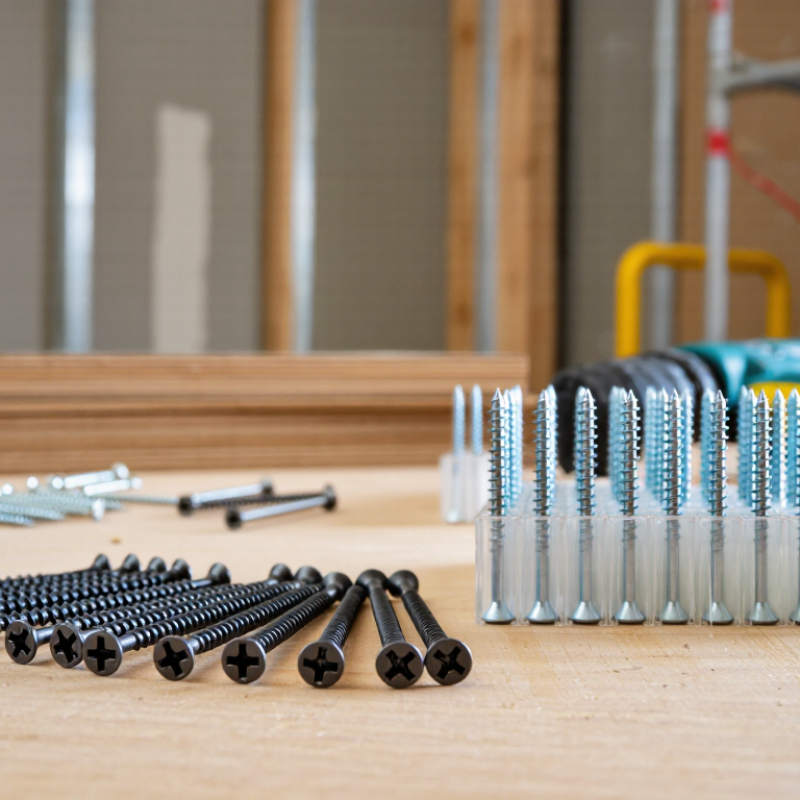
Drywall screws are purpose-built fasteners for attaching gypsum panels to wood or light-gauge metal framing. Their sharp points start quickly, while deep threads provide steady holding power. A bugle-shaped head presses into the board without tearing the paper surface. This recessed profile supports smooth joint-compound finishing.
Common collated drywall screw types include coarse-thread screws for timber framing and fine-thread screws for metal studs. Some versions use phosphate-coated steel for indoor work, while corrosion-resistant finishes suit areas with higher humidity. Screw length should match the panel thickness and framing depth. In practical installation, the screw must sink slightly below the surface, but it must not break the paper. That balance is easy to miss. It often decides whether the finished wall stays secure.
Drywall screws serve in residential walls, ceilings, partitions, repairs, and commercial interior construction. Collated designs feed through compatible screw guns, improving speed across large projects. They also reduce handling time when workers repeat the same fastening motion. However, automation does not remove the need for judgment. Overdriving can weaken the board, while insufficient depth leaves bumps under the finish.
Tips: Test the screw setting on a scrap panel first. Check thread choice against the framing material. Keep fasteners dry and inspect strips for damaged or missing screws. A small spacing error can become visible after painting. Always follow local construction requirements and the tool manufacturer’s instructions.
Collated drywall screws are magazine-fed fasteners designed for high-speed installation with compatible screw guns. Coarse-thread screws are commonly used with wood or light-gauge wood framing, while fine-thread and self-drilling types are generally selected for metal framing. The lengths shown are representative nominal sizes widely used for single-layer drywall installation; actual selection depends on board thickness, framing material, penetration requirements, coating, and local standards.
Collated drywall screw systems turn many small fastening steps into one controlled cycle. Screws sit in linked plastic strips or paper-based carriers. A compatible screw gun pulls one screw forward, drives it, and advances the next. The nosepiece controls depth. The clutch controls torque. Correct pressure keeps the bit aligned with the screw head. On a busy ceiling, this reduces hand movement and dropped fasteners. It also creates a repeatable rhythm for large installation teams.
Performance depends on matching screw length, thread design, head profile, and strip format to the board and framing. Fine-thread screws suit light-gauge metal studs, while coarse threads usually grip timber framing more effectively. The screw gun must accept the selected collated system. Small mismatches can cause feeding jams, tilted screws, or damaged paper faces. Keep the nosepiece clean. Gypsum dust can collect around the depth stop and change penetration. A practical check is simple: drive several screws into scrap board, then inspect the dimple. The head should sit slightly below the surface without breaking the paper.
Experienced crews still slow down at corners, joints, and uneven framing. Speed is useful, but not at the cost of holding power. The system is not foolproof. A worn bit or poorly adjusted depth setting can create hidden weakness behind a smooth wall. Global buyers should compare feed reliability, replacement parts, operator comfort, and service support, not only advertised driving speed. I may favor tighter controls here, because one missed adjustment can repeat across hundreds of screws. That is an uncomfortable cost.
| Collated screw type | Typical application | Common size range | Thread and point | Collation format | Buyer considerations |
|---|---|---|---|---|---|
| Coarse-thread drywall screw | Gypsum board to wood studs, timber framing, and wood furring strips | Approximately 25–55 mm length; commonly around 3.5–4.2 mm diameter | Deep coarse thread with sharp penetrating point; bugle head is standard for drywall face paper | Plastic strip or paper strip, depending on the screw-gun system | Select length to provide adequate stud penetration without breaking through services or board surfaces |
| Fine-thread drywall screw | Gypsum board to light-gauge steel studs and metal furring channels | Approximately 25–45 mm length; commonly around 3.5–4.2 mm diameter | Fine thread for metal engagement; sharp point for thin steel, unless a drill point is specified | Usually supplied in strips designed for automatic or collated screwdrivers | Verify the permitted steel thickness and required screw penetration for the project specification |
| Self-drilling drywall screw | Gypsum board installation over heavier or thicker light-gauge metal framing | Approximately 25–50 mm length; diameter varies by framing load and metal thickness | Drill-point tip creates its own hole in suitable metal; fine thread is common | Plastic or paper collated strips matched to the feeder and nosepiece | Do not substitute for structural self-drilling fasteners without checking the engineering requirement |
| Exterior or moisture-resistant coated screw | Areas with intermittent moisture exposure, subject to the board and system manufacturer’s approval | Common drywall lengths, generally about 25–55 mm | Coarse or fine thread selected according to the substrate; bugle head remains typical | Paper or polymer collation, depending on equipment compatibility | Confirm corrosion-resistance class, coating compatibility, and local building-code requirements |
| Cement-board or high-density board screw | Fiber-cement, cement backer board, and other denser panel materials | Approximately 25–50 mm length; diameter and head design vary by board system | More aggressive thread and reinforced point; some versions include cutting ribs beneath the head | Only use strips specifically rated for the selected tool and fastener geometry | Standard drywall screws may not provide the required corrosion resistance or holding performance |
| Fine-finish or reduced-drive screw | Interior drywall where controlled countersinking and reduced surface damage are priorities | Approximately 25–45 mm length | Bugle or modified bugle head with a sharp point; thread selected for wood or metal framing | Commonly supplied in high-capacity strips for automatic screw guns | Tool depth control and clutch settings are as important as screw geometry for a clean finish |
| System component or stage | Function | Typical operating detail | Important purchasing check |
|---|---|---|---|
| Screw strip | Holds individual screws at a fixed pitch and feeding angle | Strips commonly contain roughly 20–50 screws, depending on the system and screw length | Confirm strip angle, screw spacing, material, and capacity before ordering |
| Collated screw gun | Drives the screw while advancing the next fastener into position | May be corded, battery-powered, or an attachment fitted to a compatible drill or driver | Check voltage, battery platform, rated screw diameter, and supported strip style |
| Nosepiece and feeder | Guides the strip and positions one screw directly on the driving bit | A spring-loaded or sliding mechanism advances the strip after each drive cycle | The nosepiece must match both screw-head dimensions and collation geometry |
| Depth-control mechanism | Stops the screw at a controlled depth to protect the gypsum face paper | Adjustable depth settings are used for different board thicknesses and substrates | A correct setting should seat the head without tearing or over-crushing the paper |
| Driving bit | Transfers torque from the motor to the screw recess | Phillips-style recesses are common; the bit size must match the screw head | Use the specified bit type and replace worn bits to reduce cam-out and missed drives |
| Drive cycle | Advances, aligns, drives, and separates the next screw from the strip | The operator places the nosepiece on the board, applies pressure, and activates the tool | Consistent pressure, depth adjustment, and strip quality directly affect installation speed and rework |
Collated drywall screws are designed for faster, more consistent board installation with an auto-feed screw gun. In 2026, coarse-thread screws remain practical for wood studs because their deeper threads grip timber firmly. Fine-thread screws suit light-gauge metal framing and reduce excessive resistance during driving. Choose lengths that enter the stud securely without piercing hidden services or damaging the board.
Paper-collated screws are often preferred where clean feeding and easy strip disposal matter. Plastic-collated options can offer strong strip stability, especially on busy job sites. Phosphate-coated screws remain common for standard interior drywall, while corrosion-resistant coatings provide better protection in humid rooms. They are not automatically suitable for exterior exposure. Check the coating specification carefully.
Self-drilling points can simplify work with thinner metal framing, but they may be unnecessary for heavier sections. Thread spacing, head shape, drive recess, and strip angle must match the feeder. A screw that fits the board can still jam the tool. That mistake is common.
I have also seen installers select longer screws for “extra strength,” only to crush the gypsum surface. Use the assembly design, framing thickness, and local building requirements as your guide. Test a short strip before full installation. Even reliable specifications need practical checking.
Choosing a collated drywall screw starts with the substrate, not the magazine. For wood studs, coarse threads usually bite quickly and hold securely. Fine-thread screws suit light-gauge metal framing, where sharper threads reduce wandering. Use a bugle head to seat flush without tearing the paper face. That small detail matters. Shorter screws may fail to reach the stud. Longer screws can damage hidden services.
Match screw length to board thickness and framing depth, allowing solid penetration without excessive exposure. For standard boards, many installers select lengths around 25–35 mm, but project specifications should control. Moist rooms need corrosion-resistant finishes, while ordinary interiors may accept phosphate-coated screws. Avoid treating coating color as proof of performance. Ask for test data and applicable corrosion ratings. Check the strip angle, screw diameter, and magazine compatibility before ordering large quantities. Fit matters.
Global buyers should verify thread geometry, head dimensions, point style, and declared material grade. Samples deserve a real trial. Drive them at normal tool settings into the actual board and framing. Watch for paper tearing, proud heads, strip breakage, and missed feeds. Test before scaling. Record batch numbers and storage conditions, because damp cartons can affect feeding and surface finish. Local building rules and site conditions may change the choice. When evidence is incomplete, pause the purchase and request independent inspection or clear technical documentation. Do not guess.
Global buyers should match screw types with board thickness, framing material, and installation speed. Coarse-thread screws suit wood studs, while fine-thread screws perform better in metal framing. Collated strips improve workflow, but strip alignment must fit the intended tool. Bugle heads should seat cleanly without tearing the paper face. Phosphate coatings support indoor use, while corrosion-resistant finishes suit humid environments. Selection should follow destination-market requirements, not only supplier recommendations.
Quality checks need measurable evidence. Inspect screw length, diameter, thread spacing, point shape, head depth, and coating consistency. Test driving torque and pull-out performance on the actual board and framing combination. Check hardness, strip feeding, and damaged fasteners during sample trials. Salt-spray results can help compare coatings, but they do not represent every installation condition. Request batch records, inspection reports, material details, and traceable lot numbers. Small details matter.
Supplier selection should include production capacity, quality-control procedures, packaging protection, and response time. Ask for pre-shipment samples from the same production line, not showroom samples. Confirm carton labels, pallet stability, and moisture protection before booking cargo. A low unit price may hide excessive breakage or inconsistent feeding. No checklist catches everything. One weakness in many purchasing plans is trusting documents without testing field performance. Recheck critical assumptions with installers, inspectors, and local compliance specialists.
Screws sit in linked strips. A compatible screw gun drives one screw and advances the next. The cycle reduces hand movement and dropped fasteners.
Coarse threads usually grip timber framing effectively. Fine threads generally suit light-gauge metal studs. The wrong thread can wander or feed poorly.
Match length to board thickness and framing depth. Common lengths may range from 25–35 mm for standard boards. Project specifications must control.
The nosepiece controls driving depth. The screw head should sit slightly below the surface without breaking the paper face. Too deep creates hidden weakness.
Drive several screws into scrap board first. Inspect the dimples, paper faces, feeding, and strip condition. Test before scaling.
Mismatched strips, magazines, screw dimensions, or tools can cause jams. Worn bits and dirty nosepieces also create problems. Gypsum dust matters.
Moist rooms need corrosion-resistant finishes. Ordinary interiors may accept phosphate-coated screws. Coating color alone proves very little.
Check length, diameter, thread spacing, head shape, point style, hardness, and coating consistency. Request traceable batch records and inspection reports. Documents are not enough.
Request samples from the actual production line. Test them with normal settings, real boards, and real framing. Check breakage, paper tearing, proud heads, and missed feeds.
A low unit price may hide poor feeding or excessive breakage. I would favor tighter controls here. One missed adjustment can repeat hundreds of times.
This guide explains what a Collated Drywall Screw is, how its sharp point, threaded body, and corrosion-resistant finish support efficient drywall installation, and where these screws are most commonly used. It also describes how collated systems connect screws in strips or rolls, allowing compatible fastening tools to drive screws quickly with consistent spacing and reduced handling.
For 2026 global buyers, the main options include fine-thread screws for metal framing, coarse-thread screws for wood framing, self-drilling versions for heavier-gauge metal, and specialty finishes for humid or demanding environments. Choosing the right type depends on the board material, framing substrate, screw length, thread design, tool compatibility, and project conditions. Buyers should also review dimensional accuracy, coating quality, strip strength, packaging, production consistency, testing documentation, and supplier reliability before placing an order. Clear specifications and sample inspections can help ensure safe, efficient, and cost-effective purchasing.